Sunday, September 19, 2010

Susan's Shuso Blog: Forms & Ceremonies


I love forms and ceremonies: the more bells the better. I love offering incense. I love seeing the purply grey smoke rise and, in my imagination and deep feeling, I see it embrace all beings.

There are four altars in my home. As part of shuso (head student) training, I visit these altars every morning before dawn. I light candles, offer incense, say the refuges and bow to each one three times.

After sitting zazen I say the heart sutra and I offer a prayer for the continuing good health of my teacher, Darlene Cohen.

Last week she came to my home to help me set up the altars. My friends and sangha mates Sarita and Sara came with her.

Each altar was given offerings of candles, flowers, and incense. The main altar, the one I call the heart of the house, was also given an offering of sweet tea and fruit.

We walked slowly from one altar to the next lighting candles and offering incense. In doing this we were setting up the ritual I will follow for the six weeks I am shuso.

Behind me as I write is the creativity altar. It stands at the entrance to my studio where I work in clay. Sometimes other people join me in making clay figures.

When I offer incense at the studio altar I celebrate creativity in all beings. I see the Jizo Bodhisattva figure my friend Peggy made.

Jizo is a buddhist archetype known for helping people in times of transition and change. It is said that Jizo will fearlessly go into the Hell realm with you. This jizo has a smile on its face. It carries a staff of prayer flags. It holds a shining jewel in its left hand. It is able and willing to shine light on all situations.

Today I invite jizo to go with me to Berkeley Zen Center where I will be installed as shuso for a six week practice period. During this time I will be asked to teach, host practice teas, do work practice in the zendo. I so look forward to this time . I look forward to becoming more embedded in my practice and more connected to people in the sangha. I know there will be times of fear and trepidation. I will take Jizo with me. I will hold his smile in my heart.

Saturday, September 18, 2010

A Minor Glitch

There's always a bug to work out the first time, isn't there? While trying to ready Susan's first blog post, I thought I could get it all set up and save it, then just hit "publish" later on, on Sept. 19, and the post would carry the date stamp of Sept. 19. Nope. Not true. The post carried the date stamp of the date/time when I saved it as a draft. Hmmm. Learn something new every day in the blogosphere....

So -- I did some reverse engineering, and fixed it. (Don't ask for details. It wasn't very pretty.) But now Susan's first blog post does appear, as it should, on Sept. 19, the first day of her official start as shuso, and I was left with the task of filling up this silly little space here. With my ramblings. Lucky you.

I promise to have something more profound to share tomorrow.

An Introduction -- Blog Guest

For the next six weeks, I will be sharing this blog with sangha member Susan Spencer. Susan will be installed as the shuso (head student) at the fall practice period led by teacher Darlene Cohen. The practice period begins tomorrow with a one-day sit at the Berkeley Zen Center, and her induction, and ends with the final shuso ceremony at Russian River Zendo on Oct. 31, following a three-day sesshin at the Black Mountain Retreat Center. In between, Susan will teach two classes on the precepts, host practice teas with everyone signed up for the practice period, do weekly work practice at the zendo, and make daily entries here in the Russian River Zendo blog.

The theme of the fall practice period will be Shila Paramita, or "Uprightness" and its importance to the practice of considering our state of mind as primary. The focus will be looking on the precepts as a way of cultivating a calm and steady mind.

Susan moved to California from Minneapolis in 1998. She met her teacher, Darlene Cohen, at San Francisco Zen Center where she practiced until moving to Sebastopol in 2001. She presently practices at Russian River Zendo, where she participates in the life of the sangha in many ways, including acting as head gardener.

My own introduction to Susan was through her work as an artist. Susan is the marvelously talented and whimsically playful ceramicist that invited all of us into her studio last year to plunge our hands into clay, to make jizo figures for the zendo garden.

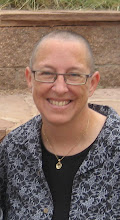
Here's how it will work: Susan's posts will appear each day with a main headline that says "Susan's Shuso Blog:...." with a secondary headline for the day. Each of her posts will also be accompanied by her photograph. I will still be acting as "blog master" - she plans to send me the text each morning by 10 a.m., and I'll post as soon after that time as I am able.

My own posts will continue as usual, about three times a week, interspersed between Susan's blogs. You'll know they're mine, because they WON'T have her photograph, or the "Susan's Shuso Blog" header.

Comments welcome, remember. I know that Susan would love feedback. This is her first time doing something like this.

Clear as mud? OK, let's go!

Sunday, September 12, 2010

Changing Hurt to Hope


One of the things that fell to the wayside when I was struggling with my own depression was reaching out and helping others. It took all I had, day to day, just to deal with my own life. But when things began to lighten, one of the first resolutions I made was to get re-involved in some way, because I missed that sense of giving back in a tangible way.

When I lived in the Bay Area, I worked as a volunteer in the field of domestic violence prevention, and also did rape crisis hot line work. I did a number of things: wrote letters, accompanied women to court, trained other volunteers. But what I enjoyed most was giving talks to groups in the community about domestic violence, educating people and raising awareness.

A couple of months ago, I contacted the YWCA in Sonoma County to ask about volunteering. The outreach team was newly formed, and while brainstorming ideas for the upcoming Domestic Violence Awareness Month in October, I came up with the notion of combining my passion for social justice with my passion for words - the result is "Changing Hurt to Hope: Writers Speak Out Against Domestic Violence."

We have solicited poetry, "flash" fiction (1000 words or less) and memoir from writers in the county on domestic violence. On three nights in October, the writers will read their words at public events, and a representative from the YWCA will give a brief talk on domestic violence, and the services provided by the Y. The events are set for Oct. 8 in Sebastopol at the Center for the Arts, on Oct. 15 at the Arts Council of Sonoma County in Santa Rosa, and on Oct. 22 at the Cloverdale Arts Alliance First Street Gallery.

It has been a challenging and fun project. A team of three volunteers, working with the YWCA's volunteer coordinator Donata Bohanec, has been meeting at least every other week since mid-July, writing up press releases, setting writing guidelines, securing locations for the events, making plans. I have also been coordinating submissions, and so have been in contact with writers. It feels wonderful to be doing something that matters, even though it is a little terrifying, because there's always the chance that it will flop - we didn't have much planning time, because we got a late start, so we've been playing catch up.

In the meantime, I am working on my own submission. Because I am a writer, for one. And secondly, I am a survivor of domestic violence, which is one of the reasons that this issue resonates for me at my very core.

For more information, go to the YWCA's website at this address. (FYI - if any of you are considering writing an entry, I have extended the deadline to Oct. 1. Just send me an email and let me know that an entry is on its way. wingpoet@gmail.com)

Monday, September 6, 2010

A New Name

The part of jukai which I was most anticipating, both with eagerness and with trepidation, was the receipt of my new Buddhist name. Traditionally, a student turns in her completed rakusu with blank white silk on the back side. And on the day of jukai, for the first time, she receives the rakusu back, inked with her new Buddhist name, and hears it spoken aloud.

My trepidation arose from the usual places - what if my name didn't make sense to me? What if it didn't fit? What if I was named "she who worries too much"? Or "she who is the biggest procrastinator"? Of course, I imagined all of my worst traits being highlighted and brought to the forefront.

The eagerness, though, was also there. This was a chance to start fresh, to see myself new. To allow myself, perhaps, to grow into a name.

When the time came during the jukai ceremony for us to receive our rakusu and names, I was sixth of the seven. So first, I was able to watch what happened to those who went before me. And it was amazing. As Cheri, my first sangha mate, heard her name, and held her rakusu in her hands, the aptness of "Dragon Soaring, Vast Mind/Heart" filled her chest and rose up into her face. The name moved into her as if it were an inhalation that she had been waiting to make for years. On down the row, it was the same. Each person seemed to fit the name; the name fit the person.

When it was my turn, I stood in front of Tony and bowed. He pronounced my new name: Ankyō Kikan. "Dark Mirror, Joyful Reflection/Insight." We bowed again, and I sat down.

I was overwhelmed with emotion. There was some initial fear, about that image of a dark mirror. The naming, we had been told, is such that the first part indicates where your practice is now, and the second part shows where you are headed. So I was grateful that Tony and Darlene foresaw joyful reflection ahead. But did they see me as dark and brooding now? Quickly, though, a trusting voice rose up from inside of me. No, it said. These are your teachers. They are giving you a gift, not something negative. I realized that it was simply a name with depth, a metaphor of complexity - and, as Tony pointed out later on, a fine name for a poet.

A week later, Darlene told me that they had used the "dark mirror" image in part to reference the deep pain in my past. But the image she had was of a mirror in the darkness, that looked frightening, because you can't see into it. Then, as you step close, suddenly a beautiful moonbeam is reflected out into the night - joyful reflection. Ah.

I am Ankyō Kikan.

Sunday, September 5, 2010

Joining Phobia

My jukai ceremony on Aug. 21 was not the first time that I spoke Buddhist vows - I actually said them once before in a public ceremony when I married Sabrina on June 29, 2008, with Tony and Darlene officiating.

But the ceremony this past August highlighted a critical difference between those two experiences: a true sense of sangha.

I began coming to the Healdsburg sangha about three and a half years ago. I attended sporadically, dipping my toe in, then running away. I wanted it so badly, but I was also wary. I was alternately aloof and removed, or too intimate, followed by a sense of being exposed and getting my feelings hurt. Finally I stopped going altogether. At home, alone, I established a regular sitting practice, which I maintained for six months, giving myself a sense of security.

In June of 2008, when the courts ruled that gays and lesbians could legally marry, I immediately knew that I wanted Tony and Darlene to conduct our wedding. I called and asked them, and they said yes. As we talked over the ceremony in the coming days, we discussed the precepts, and whether I was able to say yes to the three refuges: I take refuge in Buddha, dharma and sangha. I had no problem with the first two. But at the third, I balked. I didn't really feel like I was part of the Healdsburg sangha. I asked Tony and Darlene if I could use my community of friends as my sangha, and they said yes, of course. So that is how we went forward.

On that wedding day, I not only married the woman I love, I also at last made a commitment to my Buddhist practice. I took that first step towards belonging.

I have never been a joiner. I'm not sure why, exactly, if it's because I'm afraid people won't like me if they get too close, or if it will just get too complicated. Or maybe because joining would mean truly making a commitment, when I have always wanted a quick exit. That is probably a big part of it, since for so many years, I had at least some notion of a suicide plan on the horizon. I didn't like getting too attached. I thought I could protect people from me, from my pain, from my suffering. Even after I decided to stick around, the behavior had become a habit. I didn't know how to become part of the group. I was timid, uncertain, never clear on my role, and so I tended to avoid the scene completely.

But after those wedding vows, I began to attend the Healdsburg sangha every week. I contributed in small ways. I started setting up the altar before the sit. I took on the role of kokyo (chant leader). When asked to give a student talk, I said yes. Eventually, I was invited to prepare for jukai, and then I sewed my rakusu with six other sangha members, as well as attending precepts classes for a year. I also attended a study group for a number of months. I took turns at Russian River Zendo serving as doan, and stepped forward at one-day practice periods to serve as needed: tea server, kokyo, doan, altar attendant.

On the day of my jukai ceremony, we sat in meditation in the morning for two sessions, on cushions facing the wall. As others came in, they occupied chairs facing the opposite wall. When we turned around to start the morning service, I was surprised to see all the people in the room. And throughout the day, later on, the people who attended the service. And the stack of cards and small gifts left for those of us who went through jukai. I found myself looking around and saying, "Oh, there's Beata! And Joan! And look, Cynthia and Lisa are here. And Malcolm, Judith, Suzanne, Susan...." The list just kept going on.

Suddenly I realized - "I have sangha." Here they were. People from the Healdsburg sangha, from the Russian River Zendo sangha, from San Francisco Zen Center, from the Santa Cruz Zen Center. All of them gathered to support me and my fellow sangha members in our ordination ceremony.

Perhaps the biggest gift of the day, then, was this: I realized that I have joined, and it did not frighten me one bit. In fact, it made me glad.

Saturday, September 4, 2010

Taking the Precepts

I take refuge in Buddha.
I take refuge in dharma.
I take refuge in sangha.

On Aug. 21, with six members of my sangha, I underwent lay ordination, jukai, and took Buddhist precepts. We entered the zendo, where 50 of our friends, family members and sangha members sat as audience, in a procession with the music of inkans, clappers and drum.The ceremony was one of great formality and theater, as we seven sat on our cushions in front of the altar. In addition to our teachers, Tony Patchell and Darlene Cohen, there were about six other Zen priests in attendance, in full robes. We chanted, bowed, moved carefully and with awareness.

But underneath all of the ceremony was a bubbling joy, an effervescent excitement. It was irrepressible. Early on, Darlene blessed the room with holy water. She bent over a cup of water, murmuring very soft incantations. The entire room hushed, straining to hear her. Then she dipped a pine sprig into the water, and walked over to the altar, spraying droplets on the altar. She then came in front of those of us going through jukai, and sent water in our direction. As she flung water from the pine bough towards me, it caught me full in the face. She smiled impishly and said, "Ah, direct hit!" The entire room broke into laughter.

As we moved from that point into our vows, taking the 16 precepts, the energy of the room, of our practice together, of that afternoon, carried us. First we recited the three treasures, named above, each one three times. Then we went through the three pure precepts: Do good. Avoid doing evil. Work for the benefit of others.

Finally, there are the 10 grave precepts: 1) Do not kill. 2) Do not steal. 3) Do not misuse sexuality. 4) Do not lie. 5) Do not cloud the mind. 6) Do not speak of other's errors or faults. 7) Do not elevate the self above others. 8) Do not be withholding. 9) Do not be angry. 10) Do not defile the Three Treasures.

Our teachers asked us question after question, querying us, will you uphold these principles? And we would respond: "Yes, I will." Always, always, three times for each concept.

The repetition, the vocalization of vow in front of those we love, had a profound and deep affect on all of us that day, I think. I know it did on me.

I have been living a life committed to the path of Zen Buddhism for some time now. But on that Saturday in August, when I spoke my vows aloud, I affirmed my belief in a new way, with a renewed vigor. And I now feel more centered within my practice than ever before. It is easy to discount ceremony as pomp and frill - but there is something to the magic that happens when a group of people gathers together and performs a ritual act. Lives can and do change.